






 LATEST ART BOOKS
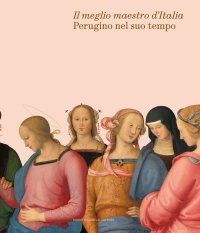
Perugino e il Suo Tempo. "Il Meglio Maestro d'Italia"
Perugia, Galleria Nazionale dell'Umbria, March 4 - June 11, 2023.
Edited by Picchiarelli V. and Pierini M.
Milano, 2023; bound, pp. 592, 650 col. ill., cm 24x21.
cover price: € 40.00
|
Books included in the offer:
Perugino e il Suo Tempo. "Il Meglio Maestro d'Italia"
Perugia, Galleria Nazionale dell'Umbria, March 4 - June 11, 2023.
Edited by Picchiarelli V. and Pierini M.
Milano, 2023; bound, pp. 592, 650 col. ill., cm 24x21.
FREE (cover price: € 40.00)
Michele Rocca e la pittura rococo a Roma
Brescia, 2004; bound in a case, pp. 310, b/w and col. ill., tavv., cm 24,5x31,5.
FREE (cover price: € 180.00)
Cucinare per gli amici
Translation by S. Mancuso.
Milano, 2012; clothbound, pp. 269, ill., cm 21x26,5.
(Gli Illustrati).
FREE (cover price: € 29.90)
Jan van Kessel I (1626-1679). Crafting a Natural History of Art in Early Modern Antwerp
Baadj Nadia
Harvey Miller Publishers
English Text.
London, 2016; clothbound, pp. 350, 60 b/w ill., 20 col. ill., cm 22x28.
(Studies in Baroque Art (HMSBA 5)).
series: Studies in Baroque Art (HMSBA 5)
ISBN: 1-909400-23-8 - EAN13: 9781909400238
Subject: Monographs (Painting and Drawing)
Period: 1400-1800 (XV-XVIII) Renaissance
Places: Europe
Languages: 
Weight: 1.72 kg
The Antwerp artist Jan van Kessel the Elder (1626-1679) was esteemed throughout Europe for producing finely-wrought, miniature paintings on copper that depict a wide range of flora and fauna, exotic landscapes, and objects of natural artistry (e.g. shells, coral, precious stones). The 'natural' world presented in Van Kessel's art was not a transparent window onto nature, however, but instead was ambitiously crafted through the artist's reappropriation of Antwerp's artistic traditions, material culture, and artisanal knowledge practices. Through a combination of wit, technical virtuosity, self-referentiality, and allusions to local art-historical lineage, Van Kessel's paintings encourage viewers to simultaneously think about art, in terms of collecting, connoisseurship, citation, and media, and think anew about nature.
This study uses Van Kessel's art as a distinctive lens through which to examine the relationship between craft, curiosity, and the pursuit of natural knowledge in the early modern period. Each chapter situates Van Kessel within a particular context where art and natural history intersected in late seventeenth-century Antwerp. Taken together, these investigations reveal how his production responded to a unique convergence of circumstances in that city which included the growth of a popular, commercial strand of natural history, a thriving culture of art collecting and connoisseurship focused on local artists, and a burgeoning luxury industry. Van Kessel's material and conceptual interventions into the representation of nature, such as his innovative, painted "cabinets without drawers" and witty signatures formed from insects and snakes, enabled him to redefine the scope of natural historical illustration and negotiate the value and status of the small-format cabinet picture.

Pietro Bellotti Detto Canaletty. Un Vedutista Veneziano nella Francia dell'Ancien Régime

Aeroporto di Salerno - Pontecagnano 100 anni. Da Campo di Fortuna a Scalo Internazionale
Linear Elamite Inscriptions and Related Cuneiform Texts I. Linear Elamite Texts From Susa. Vol. 10
Gigante 2027. Catalogo nazionale delle monete italiane dal '700 alla fine della lira
Conte e Mattarella. Sul palcoscenico e dietro le quinte del Quirinale. Un racconto sulle istituzioni
