






 NOVITA' ARTE
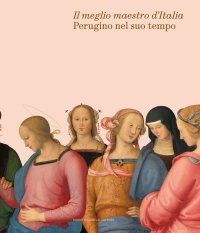
Perugino e il Suo Tempo. "Il Meglio Maestro d'Italia"
Perugia, Galleria Nazionale dell'Umbria, 4 marzo - 11 giugno 2023.
A cura di Picchiarelli V. e Pierini M.
Milano, 2023; ril., pp. 592, 650 ill. col., cm 24x21.
prezzo di copertina: € 40.00
|
Libri compresi nell'offerta:
Perugino e il Suo Tempo. "Il Meglio Maestro d'Italia"
Perugia, Galleria Nazionale dell'Umbria, 4 marzo - 11 giugno 2023.
A cura di Picchiarelli V. e Pierini M.
Milano, 2023; ril., pp. 592, 650 ill. col., cm 24x21.
OMAGGIO (prezzo di copertina: € 40.00)
Michele Rocca e la pittura rococo a Roma
Brescia, 2004; ril. in cofanetto, pp. 310, ill. b/n e col., tavv., cm 24,5x31,5.
OMAGGIO (prezzo di copertina: € 180.00)
Cucinare per gli amici
Traduzione di S. Mancuso.
Milano, 2012; ril., pp. 269, ill., cm 21x26,5.
(Gli Illustrati).
OMAGGIO (prezzo di copertina: € 29.90)
The latin inscriptions of Medici Florence. Piety and propaganda, civic pride and the classical past. Nuova ediz
Kragelund Patrick
Quasar Riviste
New edition.
Roma, 2021; br., pp. 364, ill. b/n e col., cm 15x18.
(Analecta Romana Instituti Danici. Supplementa. 55).
collana: Analecta Romana Instituti Danici. Supplementa
ISBN: 88-5491-115-1 - EAN13: 9788854911154
Soggetto: Saggi e Studi sull'antichità,Saggi Storici
Periodo: 0-1000 (0-XI) Antico,1000-1400 (XII-XIV) Medioevo,1400-1800 (XV-XVIII) Rinascimento,1800-1960 (XIX-XX) Moderno
Luoghi: Firenze,Italia,Toscana
Testo in: 
Peso: 1.747 kg
Among the early highlights are inscriptions commemorating the father of Dante's Beatrice and the building of Ponte Vecchio, of the Bargello and the Duomo. The book opens new perspectives by unravelling how the humanist study of classical epigraphy from the 1430s onwards made a lasting impact on the composition of Florentine inscriptions. This is a hitherto little acknowledged aspect of the so-called civic humanism. While moving away from a framework based upon Scripture and Christian values, civic humanism looked to ancient Rome for inspiration and models.
Another focus is the way the rise to power of the Medici is mirrored in centralised efforts to give official epigraphy the suitably Augustan and imperial (as opposed to republican) formats. From 1537 onwards, Cosimo, the second Duke and, eventually, the first Grand Duke, literally inscribed what was now his city of residence, its walls, bridges, churches, mercati, squares and monuments - and this in a manner underlining his monarchical ambitions. When the decline of the Grand Duchy set in, this was mirrored in a decline of the dynasty's epigraphical self-promotion, memorials in the end often focusing on past glories.
What survived Florence's transition from merchant republic to monarchy was the pervasive and highly patriotic cult of uomini illustri. Monuments to men of letters and art are numerous, this trend reaching its nadir with the memorials for the divine Michelangelo. In contrast, honours for the period's greatest scientist, Galilei Galileo, was at first vehemently opposed by the Church, his belated rehabilitation only taking place almost a century after the Inquisition had condemned his teachings


L'immagine e la parola. Scritti per Alessandra Galizzi Kroegel
