






 NOVITA' ARTE
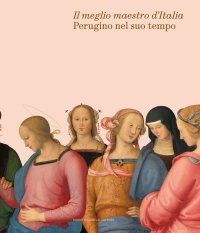
Perugino e il Suo Tempo. "Il Meglio Maestro d'Italia"
Perugia, Galleria Nazionale dell'Umbria, 4 marzo - 11 giugno 2023.
A cura di Picchiarelli V. e Pierini M.
Milano, 2023; ril., pp. 592, 650 ill. col., cm 24x21.
prezzo di copertina: € 40.00
|
Libri compresi nell'offerta:
Perugino e il Suo Tempo. "Il Meglio Maestro d'Italia"
Perugia, Galleria Nazionale dell'Umbria, 4 marzo - 11 giugno 2023.
A cura di Picchiarelli V. e Pierini M.
Milano, 2023; ril., pp. 592, 650 ill. col., cm 24x21.
OMAGGIO (prezzo di copertina: € 40.00)
Michele Rocca e la pittura rococo a Roma
Brescia, 2004; ril. in cofanetto, pp. 310, ill. b/n e col., tavv., cm 24,5x31,5.
OMAGGIO (prezzo di copertina: € 180.00)
Cucinare per gli amici
Traduzione di S. Mancuso.
Milano, 2012; ril., pp. 269, ill., cm 21x26,5.
(Gli Illustrati).
OMAGGIO (prezzo di copertina: € 29.90)
Pontormo at San Lorenzo. The Making and Meaning of a Lost Renaissance Masterpiece
Elizabeth Pilliod
Harvey Miller Publishers
Testo Italiano e Inglese.
London, 2022; ril., pp. 320, 58 ill. b/n, 90 ill. col., cm 22,5x30.
(Studies in Medieval and Early Renaissance Art History).
collana: Studies in Medieval and Early Renaissance Art History
ISBN: 1-909400-94-7 - EAN13: 9781909400948
Soggetto: Pittura,Pittura e Disegno - Monografie
Periodo: 1400-1800 (XV-XVIII) Rinascimento
Luoghi: Firenze
Testo in: 

Peso: 1.901 kg
Pontormo's frescoes in San Lorenzo were the most important cycle of the sixteenth century after Michelangelo's Sistine frescoes. They had an enormous impact on artists until their destruction in the eighteenth century, and their interpretation has also had a significant bearing not only on the reception of this artist, but also of late Renaissance art in Florence.
Based on careful archival and historical scholarship, this book determines a new date for the inception of the fresco cycle and reconstructs the day by day procedures through which the artist generated his creation. It establishes his working method, and what it produced. It creates a new visual order for the frescoes. It sets them into the artistic and architectural context of the church in which they were created, relating them to a complex liturgical and religious function. It establishes the intentions of the both the Medici and the canons of the church in having Pontormo paint the specific space in the church where he painted, and the specific subjects that were included. Finally, it reveals the hitherto unsuspected impact Pontormo's paintings had on other works of art.
Elizabeth Pilliod is the author of Pontormo, Bronzino, Allori: A Genealogy of Florentine Art; Italian Drawings: Florence, Siena, Modena, Bologna; Drawings in Swedish Public Collections 8; numerous articles on 16th century Florentine art; and co-editor of Time and Place. Essays in the Geohistory of Art. She has been a Fellow at Villa I Tatti, the Harvard Center for Italian Renaissance Studies in Florence and a NEH stipend recipient.

Pietro Bellotti Detto Canaletty. Un Vedutista Veneziano nella Francia dell'Ancien Régime
Luoghi Magici di Bologna. Vol. 1: la Piazza e i Suoi Simboli Segreti
Officina Zanon 1946-2026. 80 anni di sapere artigiano-80 Years of craft knowledge. Ediz. bilingue

Dromos. Libro periodico di architettura. (2026). Vol. 15: Post-model
Pastori. Sguardi contemporanei tra il Lagorai e la pianura. Ediz. illustrata
Conte e Mattarella. Sul palcoscenico e dietro le quinte del Quirinale. Un racconto sulle istituzioni
