






 NOVITA' ARTE
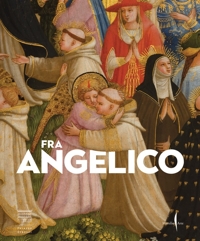
Beato Angelico. Ediz. a colori
Firenze, Palazzo Strozzi, 26 settembre 2025 - 25 gennaio 2026.
A cura di Carl Brandon Strehlke.
Testi di Stefano Casciu, Marco Mozzo, Angelo Tartuferi.
Venezia, 2025; cartonato, pp. 440, 300 ill. col., cm 25,2x29,8.
prezzo di copertina: € 80.00
|
Libri compresi nell'offerta:
Beato Angelico. Ediz. a colori
Firenze, Palazzo Strozzi, 26 settembre 2025 - 25 gennaio 2026.
A cura di Carl Brandon Strehlke.
Testi di Stefano Casciu, Marco Mozzo, Angelo Tartuferi.
Venezia, 2025; cartonato, pp. 440, 300 ill. col., cm 25,2x29,8.
OMAGGIO (prezzo di copertina: € 80.00)
Marche e Toscana. Terre di grandi maestri tra Quattro e Seicento
Ospedaletto, 2007; ril., pp. 320, ill. col., tavv. col., cm 25,5x29.
OMAGGIO (prezzo di copertina: € 77.00)
Segni dell'Eucarestia
A cura di M. Luisa Polichetti.
Ancona, Osimo, Loreto Jesi, Senigallia, Fabriano e Metelica, 23 giugno - 31 ottobre 2011.
Torino, 2011; br., pp. 221, ill. b/n e col., cm 24x28.
OMAGGIO (prezzo di copertina: € 32.00)
Giorgio de Chirico. Myth and Mystery
Silvana Editoriale
London, Estorick Collection, 15 gennaio - 19 aprile 2014.
London, Estorick Collection, 15 gennaio - 19 aprile 2014.
Testo Inglese.
Cinisello Balsamo, 2014; br., pp. 96, 70 ill. b/n e col., 70 tavv. b/n e col., cm 17x24.
collana: Estorick collection of modern italian art
ISBN: 88-366-2795-1 - EAN13: 9788836627950
Soggetto: Pittura e Disegno - Monografie,Scultura e Arti Decorative - Monografie
Periodo: 1800-1960 (XIX-XX) Moderno
Testo in: 
Peso: 0.4 kg
His unsettling 'Metaphysical' imagery - with its illogical perspectives, looming mannequins and bizarre juxtapositions of objects - anticipated Surrealism's fascination with the irrational and the workings of the subconscious by many years. Even before the First World War, de Chirico had declared: 'To be really immortal a work of art must go beyond the limits of the human: good sense and logic will be missing from it. In this way it will come close to the dream state, and also to the mentality of children.' Although best known as a painter, de Chirico was fascinated by sculpture throughout his career, believing it to possess a mysterious spectral quality. Statues set in deserted city squares were a key element of his iconography from 1909 onward, and toward the end of the 1930s the artist began to experiment with sculpture, creating terracotta versions of the enigmatic figures that had long populated his paintings.
In these works, which reflect de Chirico's enduring fascination with classical subjects, characters from mythology such as Hector and Andromache take on the forms of tailors' dummies or intricately constructed automatons. During the 1960s he produced bronze versions of such works, and subsequently began to create multiples, often with highly-polished gold or silver finishes. The exhibition focuses on these late pieces in particular and also includes a number of drawings and paintings on related themes. Myth and Mystery illuminates an aspect of de Chirico's career that will be unfamiliar to many, vividly evoking that sense of magic and surprise which the artist associated with sculpture, and reaffirming his position as one of the most important and consistently imaginative figures of modern Italian art.

Klimt, Schiele, Kokoschka e il corpo nell'arte contemporanea

Gli occhi dell'arte. Scritti, studi e opere in onore di Ferdinando Peretti. Ediz. italiana e inglese
Giovanni Bernardo Carbone 1616-1683. Un ritrattista «alla moda» nella Genova di metà Seicento
Museo della Ceramica Contemporanea Mediterranea di Cava de' Tirreni. Ediz. a colori
Nel segno di Venezia. La donazione Alessandro Favaretto Rubelli
Conte e Mattarella. Sul palcoscenico e dietro le quinte del Quirinale. Un racconto sulle istituzioni
