






 NOVITA' ARTE
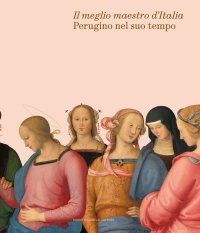
Perugino e il Suo Tempo. "Il Meglio Maestro d'Italia"
Perugia, Galleria Nazionale dell'Umbria, 4 marzo - 11 giugno 2023.
A cura di Picchiarelli V. e Pierini M.
Milano, 2023; ril., pp. 592, 650 ill. col., cm 24x21.
prezzo di copertina: € 40.00
|
Libri compresi nell'offerta:
Perugino e il Suo Tempo. "Il Meglio Maestro d'Italia"
Perugia, Galleria Nazionale dell'Umbria, 4 marzo - 11 giugno 2023.
A cura di Picchiarelli V. e Pierini M.
Milano, 2023; ril., pp. 592, 650 ill. col., cm 24x21.
OMAGGIO (prezzo di copertina: € 40.00)
Michele Rocca e la pittura rococo a Roma
Brescia, 2004; ril. in cofanetto, pp. 310, ill. b/n e col., tavv., cm 24,5x31,5.
OMAGGIO (prezzo di copertina: € 180.00)
Cucinare per gli amici
Traduzione di S. Mancuso.
Milano, 2012; ril., pp. 269, ill., cm 21x26,5.
(Gli Illustrati).
OMAGGIO (prezzo di copertina: € 29.90)
Venetian and Ottoman Heritage in the Aegean. The Bailo House in Chalcis, Greece
Brepols Publishers
A cura di Nikos D. Kontogiannis e Stefania S. Skartsis.
Testo Inglese.
Turnhout, 2019; br., pp. 280, 140 ill. b/n, 30 ill. col., cm 22x28.
ISBN: 2-503-58409-8 - EAN13: 9782503584096
Soggetto: Architettura e Arte Civile
Testo in: 
Peso: 0.65 kg
This book tells the astonishing story of a secular building and its inhabitants over six centuries and four successive civilizations. The Bailo House was constructed as a public loggia in the 14th century by Venetian offi cials in their Aegean colony of Negroponte on the Byzantine island of Euripos.
Italian designs were followed and copied in the style of the lagoon's palaces, digging the foundations through the earlier Byzantine layers. It later became seat of an Ottoman offi cial, also housing his apothecary. It subsequently passed into the hands of a local Ottoman dignitary, who completely transformed it into a typical Middle Eastern mansion. In the early 19th century it was reshaped once again with a neoclassical façade to conform to the European models promoted by the Modern Greek state.
Extensive study, excavations and restorations over a ten-year period revealed remarkable evidence for one of the few remaining examples of secular architecture in the Eastern Mediterranean, as well as abundant and rare information about urban planning, material culture, economic and cultural exchanges, art and aesthetics, etc. It is the tale of a harbor town that was always cosmopolitan, a port of call along the Silk Road, the winter base of the Ottoman fl eet, a European enclave in the East.

Pietro Bellotti Detto Canaletty. Un Vedutista Veneziano nella Francia dell'Ancien Régime
Luoghi Magici di Bologna. Vol. 1: la Piazza e i Suoi Simboli Segreti
Officina Zanon 1946-2026. 80 anni di sapere artigiano-80 Years of craft knowledge. Ediz. bilingue

Dromos. Libro periodico di architettura. (2026). Vol. 15: Post-model
Conte e Mattarella. Sul palcoscenico e dietro le quinte del Quirinale. Un racconto sulle istituzioni
