






 NOVITA' ARTE
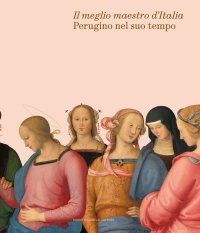
Perugino e il Suo Tempo. "Il Meglio Maestro d'Italia"
Perugia, Galleria Nazionale dell'Umbria, 4 marzo - 11 giugno 2023.
A cura di Picchiarelli V. e Pierini M.
Milano, 2023; ril., pp. 592, 650 ill. col., cm 24x21.
prezzo di copertina: € 40.00
|
Libri compresi nell'offerta:
Perugino e il Suo Tempo. "Il Meglio Maestro d'Italia"
Perugia, Galleria Nazionale dell'Umbria, 4 marzo - 11 giugno 2023.
A cura di Picchiarelli V. e Pierini M.
Milano, 2023; ril., pp. 592, 650 ill. col., cm 24x21.
OMAGGIO (prezzo di copertina: € 40.00)
Michele Rocca e la pittura rococo a Roma
Brescia, 2004; ril. in cofanetto, pp. 310, ill. b/n e col., tavv., cm 24,5x31,5.
OMAGGIO (prezzo di copertina: € 180.00)
Cucinare per gli amici
Traduzione di S. Mancuso.
Milano, 2012; ril., pp. 269, ill., cm 21x26,5.
(Gli Illustrati).
OMAGGIO (prezzo di copertina: € 29.90)
The Production of Stained Glass in the County of Flanders and the Duchy of Brabant from the XVth to the XVIIIth Centuries. Materials and Techniques
Caen
Harvey Miller Publishers
Testo Inglese.
London, 2009; ril. in tela, pp. 456, 450 ill. col., cm 24x32.
ISBN: 1-905375-64-6 - EAN13: 9781905375646
Soggetto: Arte Vetraria
Periodo: 1400-1800 (XV-XVIII) Rinascimento
Testo in: 
Peso: 2.66 kg
To give a clear picture of material and technical developments, the period under consideration starts with a prologue (from the early fifteenth century) and ends with an epilogue (into the first decades of the eighteenth century). The subjects of research were not restricted to the glass still present in our region, but included case studies on stained glass from the Low Countries found in Spain (Miraflores, Leon and Seville), Portugal (Batalha) and England (Oxford). Stained glass windows from the Low Countries were in any case highly desirable luxury products that were exported all over Europe.
The approach based on the conservation-restoration perspective is largely innovative, since past studies on stained glass in our region have mainly been founded on one well-defined approach. It was unusual to make connections between, for example, the results of chemical analyses of glass and the art historical interpretation or correct dating. The uniqueness of the modern conservationist-restorer's approach lies in the fact that he or she is required to consider our cultural heritage in a broad and integrated way with a view to correct diagnosis and suitable treatment.
This research, although only an initial exploration, has already resulted in some highly relevant new insights. This study is also able to demonstrate that the art of stained glass, contrary to what was generally assumed, was still technically very refined into the first half of the eighteenth century, although mainly in the Northern Netherlands, where worldly clients continued to value stained glass windows as an expression of their wealth and prestige.
The conclusion emphatically confirms the importance of interdisciplinary cooperation with a view to conserving our cultural heritage. Historical and scientific research is after all an essential complement to visual observation. Together, these various analytical methods are a guide to better interpretation of the heritage we seek to preserve, its story of decay, and the efforts at restoration. Without this integrated collection of information, every study will be limited by its own shortcomings and prejudices, which could of course be a hazard when actively intervening to conserve stained glass.

Pietro Bellotti Detto Canaletty. Un Vedutista Veneziano nella Francia dell'Ancien Régime

Aeroporto di Salerno - Pontecagnano 100 anni. Da Campo di Fortuna a Scalo Internazionale
Linear Elamite Inscriptions and Related Cuneiform Texts I. Linear Elamite Texts From Susa. Vol. 10
Gigante 2027. Catalogo nazionale delle monete italiane dal '700 alla fine della lira
Conte e Mattarella. Sul palcoscenico e dietro le quinte del Quirinale. Un racconto sulle istituzioni
