






 NOVITA' ARTE
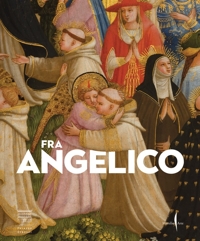
Beato Angelico
Firenze, Palazzo Strozzi, 26 settembre 2025 - 25 gennaio 2026.
A cura di Carl Brandon Strehlke.
Testi di Stefano Casciu, Marco Mozzo, Angelo Tartuferi.
Venezia, 2025; ril., pp. 440, 300 ill. col., cm 25,2x29,8.
prezzo di copertina: € 80.00
|
Libri compresi nell'offerta:
Beato Angelico
Firenze, Palazzo Strozzi, 26 settembre 2025 - 25 gennaio 2026.
A cura di Carl Brandon Strehlke.
Testi di Stefano Casciu, Marco Mozzo, Angelo Tartuferi.
Venezia, 2025; ril., pp. 440, 300 ill. col., cm 25,2x29,8.
OMAGGIO (prezzo di copertina: € 80.00)
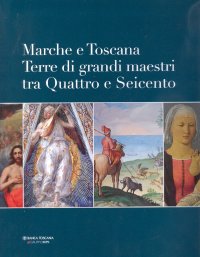
Marche e Toscana. Terre di grandi maestri tra Quattro e Seicento
Ospedaletto, 2007; ril., pp. 320, ill. col., tavv. col., cm 25,5x29.
OMAGGIO (prezzo di copertina: € 77.00)
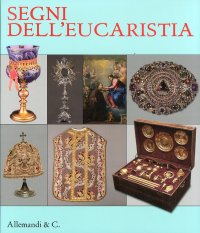
Segni dell'Eucarestia
A cura di M. Luisa Polichetti.
Ancona, Osimo, Loreto Jesi, Senigallia, Fabriano e Metelica, 23 giugno - 31 ottobre 2011.
Torino, 2011; br., pp. 221, ill. b/n e col., cm 24x28.
OMAGGIO (prezzo di copertina: € 32.00)
Andrea Riccio. Renaissance Master of Bronze
Allen Denise
Philip Wilson Publishers
New York, The Frick Collection, 15 ottobre 2008 - 18 gennaio 2009.
New York, The Frick Collection, 15 ottobre 2008 - 18 gennaio 2009.
Testo Inglese.
London, 2008; cartonato, pp. 345, 240 ill. col., cm 25x28.
ISBN: 0-85667-656-X - EAN13: 9780856676567
Soggetto: Scultura e Arti Decorative - Monografie
Periodo: 1400-1800 (XV-XVIII) Rinascimento
Luoghi: Veneto
Testo in: 
Peso: 2.2 kg
Although celebrated during the sixteenth century as a "sovereign over bronze," Riccio today is not widely known nor are his works generally understood. Representing both classical and religious subjects, they range from figurative statuettes to narrative reliefs to functional objects. His small-scale statuettes - such as the inimitable Shouting Horseman, from the Victoria and Albert Museum, London - embrace the themes of monumental Renaissance sculpture and painting while his narrative reliefs - including his tour de force Saint Martin and the Beggar from the Ca' d'Oro, Venice - demonstrate his remarkable ability to re-envision Christian themes in his own original classical idiom. Functional bronzes - like the Frick's superb Oil Lamp - evoke, in miniature scale, the artistry and symbolic complexity of Riccio's great masterpiece, the Paschal Candelabrum, which remains in situ in the Basilica of Saint Anthony, Padua.
Riccio was born Andrea Briosco and gained his nickname because of his curly hair. He worked in Padua at a time when it was internationally renowned: the Basilica of Saint Anthony, or il Santo, was a locus of pilgrimage and its university was the greatest center of Aristotelian studies in Europe. The city attracted students and eminent scholars from across the continent, some of whom became Riccio's patrons and friends. Riccio began his career there as a goldsmith but a chronic affliction forced him to specialize in bronze, a less strenuous art form. In this new field, he could model in soft materials such as wax or clay and exercise his talent as an inventor of compositions in relief and in the round.
Riccio was first employed by Bartolomeo Bellano, one of Donatello's pupils. Both Bellano and Donatello created some of their greatest monuments in bronze for the Santo's choir. Riccio's training and experience thus located him within the illustrious tradition of bronze sculpture in Padua, where he would become its greatest sixteenth-century master.
Andrea Riccio: Renaissance Master of Bronze has been organized by Denise Allen, Curator at The Frick Collection, and Peta Motture, Senior Curator of Sculpture at the Victoria and Albert Museum, London.

Pietro Bellotti Detto Canaletty. Un Vedutista Veneziano nella Francia dell'Ancien Régime
Klimt, Schiele, Kokoschka e il corpo nell'arte contemporanea

Gli occhi dell'arte. Scritti, studi e opere in onore di Ferdinando Peretti. Ediz. italiana e inglese
Museo della Ceramica Contemporanea Mediterranea di Cava de' Tirreni. Ediz. a colori
Nel segno di Venezia. La donazione Alessandro Favaretto Rubelli
Klimt, Schiele, Kokoschka e il corpo nell'arte contemporanea
Conte e Mattarella. Sul palcoscenico e dietro le quinte del Quirinale. Un racconto sulle istituzioni
